IoT · 2017 - 2020
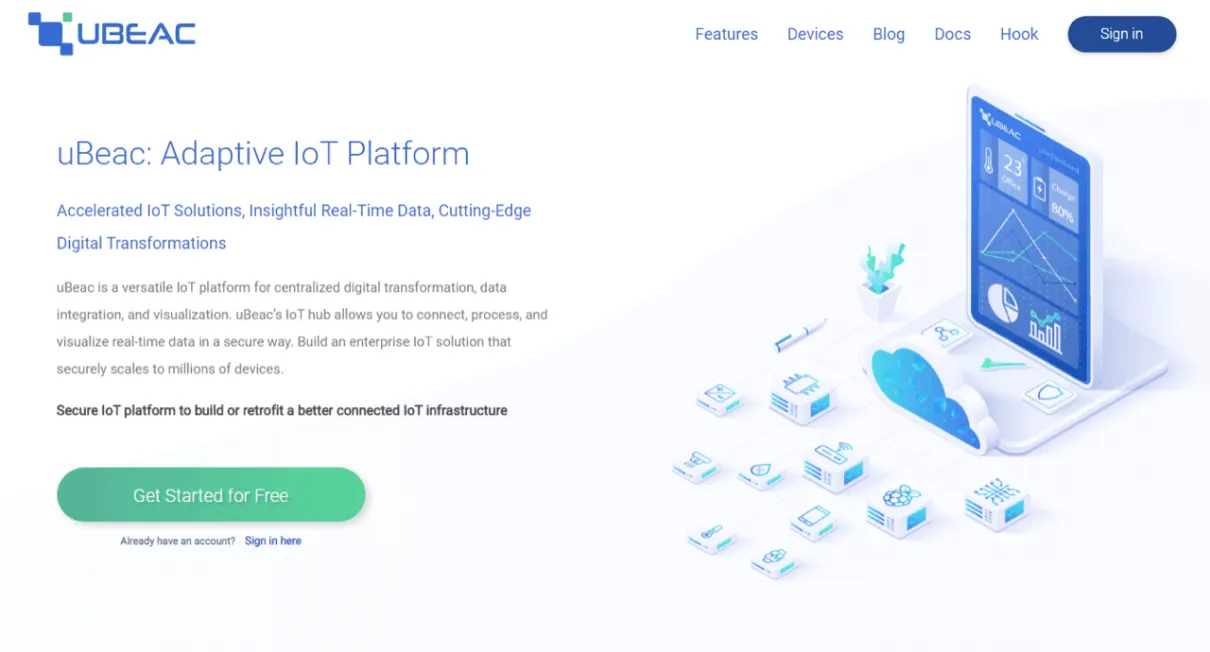
uBeac - Multi-Tenant IoT Platform for Smart Buildings
An IoT platform that turned off-the-shelf Bluetooth gateways into live building dashboards in minutes. Founded by Momentaj's founder, grown to more than 3,000 registered users, acquired in 2020, and now published as an open-source reference architecture.
Outcomes
- 3,000+ registered users; acquired in 2020
- 100M+ documents a week ingested on MongoDB and RabbitMQ
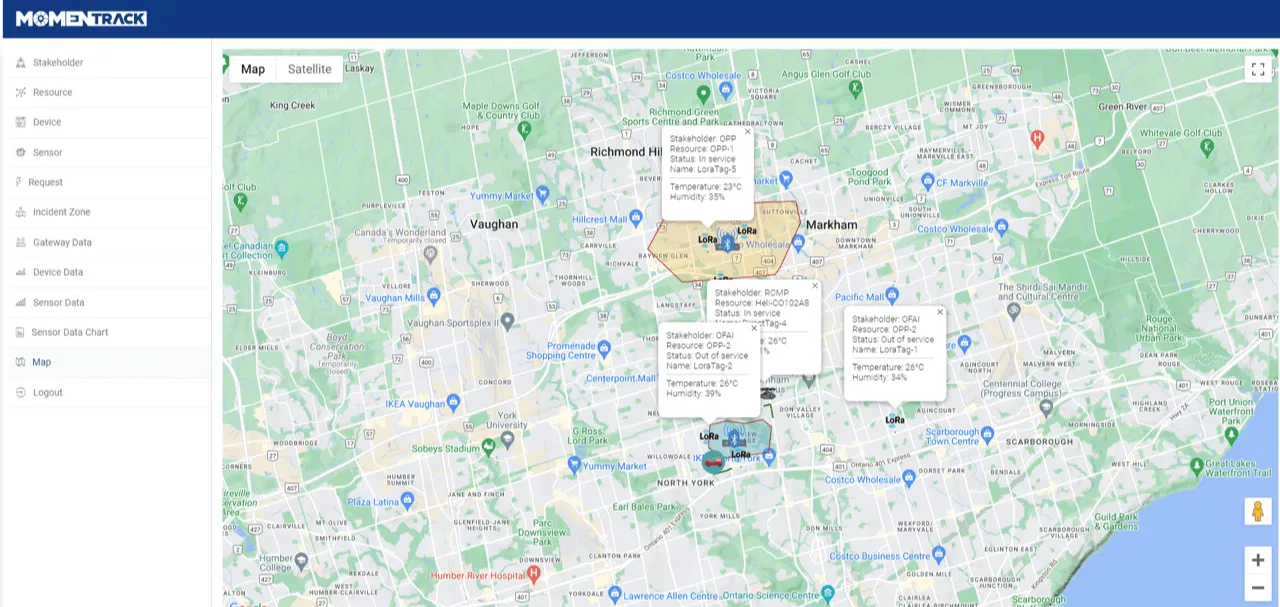
- Architecture reused for Momentrack and Tingslab
- Backend published under MIT as a reference architecture
Overview
uBeac was a multi-tenant IoT platform for BLE gateways and building sensors, founded in 2017 by Momentaj's founder and built by the Momentaj team. Companies used it to centralise device management: data collection over HTTP, MQTT and CoAP, processing, visualisation and alerts, with LoRa, Wi-Fi, Zigbee and Z-Wave gateways and sensors implemented as prototyping examples. It grew to more than 3,000 registered users and was acquired in 2020.
The Challenge
Keeping a multi-tenant IoT platform fast under load. Buildings full of beacons and sensors produce a constant stream of small readings, and the platform had to ingest more than 100 million documents a week into MongoDB while delivering live updates to browsers, retrying messages that failed, isolating tenants from each other and keeping devices secure. Underneath it sat hard radio questions: how far a beacon's signal really reaches, and how to place a device indoors from signal strength alone.
What We Built
A layered, queue-based architecture: ingest fast, queue everything on RabbitMQ, decode on the server, store in MongoDB, and stream live to the browser over SignalR. The same pattern was later reused for Momentrack, which is why a team of nine could have a seven-service private cloud running within two milestones. Alongside the platform we ran four rounds of indoor-positioning experiments across five gateway brands and nine beacon types; BLE fingerprinting with scikit-learn reached 85% zone accuracy with a random forest. Two academic collaborations grew from this work, with George Brown College's NSERC Industrial Research Chair in Smart Connected Buildings and with Ryerson University, now Toronto Metropolitan University.
Results
More than 3,000 registered users, an acquisition in 2020, and an architecture that has carried two further products. uBeac's backend is now published under the MIT licence as a reference architecture for IoT platforms.
Related work

Have a similar problem?
Tell us what you are trying to do. We will say how close this is and what it would take.
Book an AI consultation